
The Full Story
Two hundred years ago, banks weren't for people like us. If you were an ordinary working family, any savings went under the mattress. One bad winter or one lost job could leave you begging from the parish.
In the small village of Ruthwell in Dumfriesshire, the Church of Scotland minister Henry Duncan watched it happen year after year. Hard-working families lost everything. It wasn't because they were idle. They simply had nowhere safe to put a few shillings.
So in May 1810 he opened a bank for them, in the rooms of the village Friendly Society. Members paid in small sums through the year. The bank paid them interest, something the rich had always enjoyed. It had written rules. It held an annual general meeting where members could overrule the managers. It paid its own way. That is why it is widely regarded as the first savings bank in the world run on proper business lines.
Duncan ran it himself, without pay. Any surplus went back into the community. For the first time, working families in Ruthwell had something put by for hard times.
Then he told everyone. He wrote about the idea to anyone who would listen. It spread fast. Within ten years, savings banks across the United Kingdom were looking after more than £3 million sterling for ordinary savers. The trustee savings banks grew from that movement. Today's TSB counts the little bank at Ruthwell among its forebears.
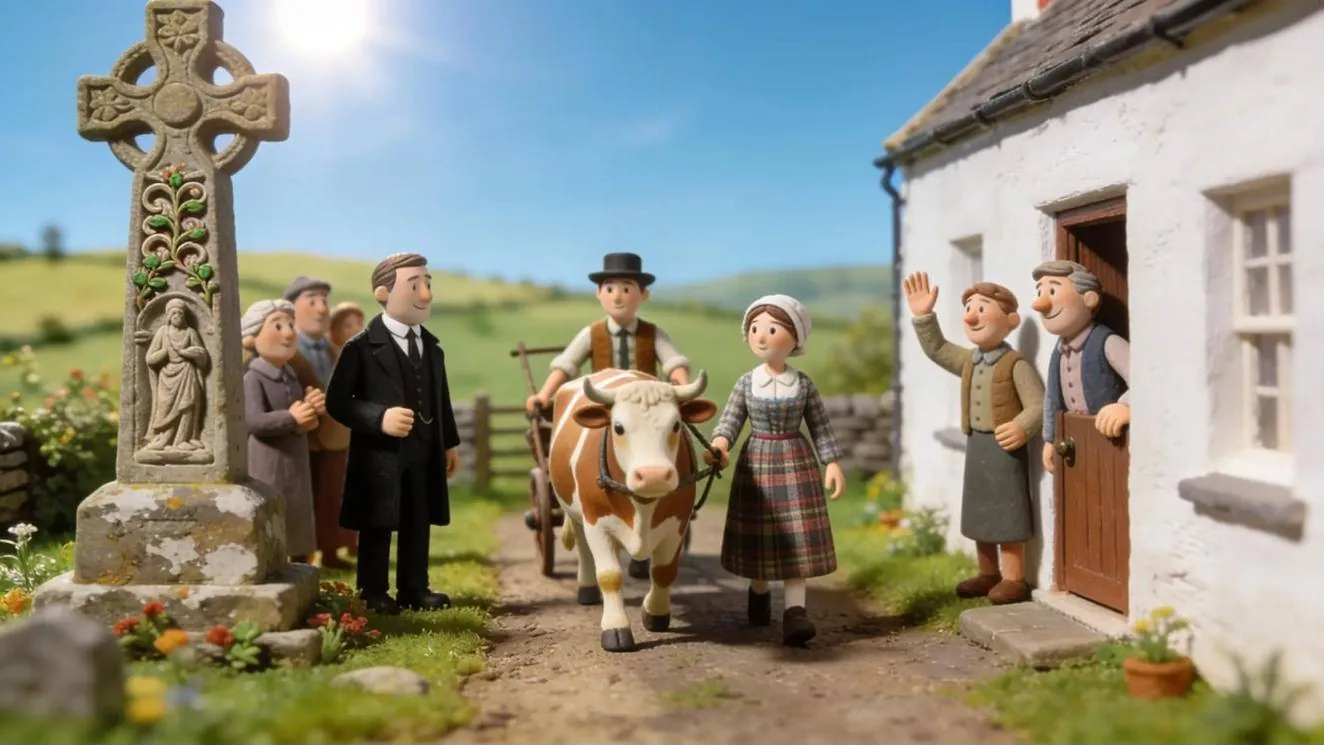
He did one more thing for Ruthwell. In his parish lay the broken pieces of a carved stone cross, made in the early 700s when the kings of Northumbria ruled this corner of Scotland. Around 1642 a church order against "idolatrous monuments" had seen it pulled down. Some pieces were buried in the churchyard. Others were used as seating in the church. From 1802 Duncan gathered the fragments up. He set the cross back on its feet.
Its carved runes carry lines from The Dream of the Rood, one of the earliest poems in the English language. The cross still stands inside Ruthwell church today.
His little bank is still there too. It's a museum now, telling the story of the country minister who gave ordinary people a bank.
Why This Matters
Henry Duncan's bank gave working families something only the wealthy had enjoyed: a safe place for their money that paid them for saving it. He did it without pay, with no grand institution behind him, from a village in Dumfriesshire. The savings bank movement that followed helped countless ordinary people across Britain build a little security against hard times. He also rescued one of the great treasures of early medieval Britain from the rubble. One country minister left two gifts. Both are still standing in Ruthwell.
Key Facts
- ✓The Ruthwell bank opened in May 1810 in the rooms of the village Friendly Society (Wikipedia, Ruthwell Savings Bank)
- ✓Depositors were required to lodge at least four shillings a year. The annual general meeting could overrule management decisions (Wikipedia, Ruthwell Savings Bank)
- ✓Duncan is recorded as founder of the first savings bank run on business principles and was known as the Father of Savings Banks (National Records of Scotland)
- ✓Duncan ran the bank without pay; within a decade savings banks in many parts of the UK held over £3 million (Undiscovered Scotland)
- ✓The Ruthwell Cross dates from the early 700s, was broken up around 1642 and was re-erected by Duncan from 1802 (Historic Environment Scotland)
- ⚠Ruthwell's claim to be the first savings bank was disputed at the time by Edinburgh Savings Bank. Ruthwell is widely held to be first, but it is a claim, not a settled fact.