The Full Story
The Oxford English Dictionary wasn't written by professors. It was built by the public.
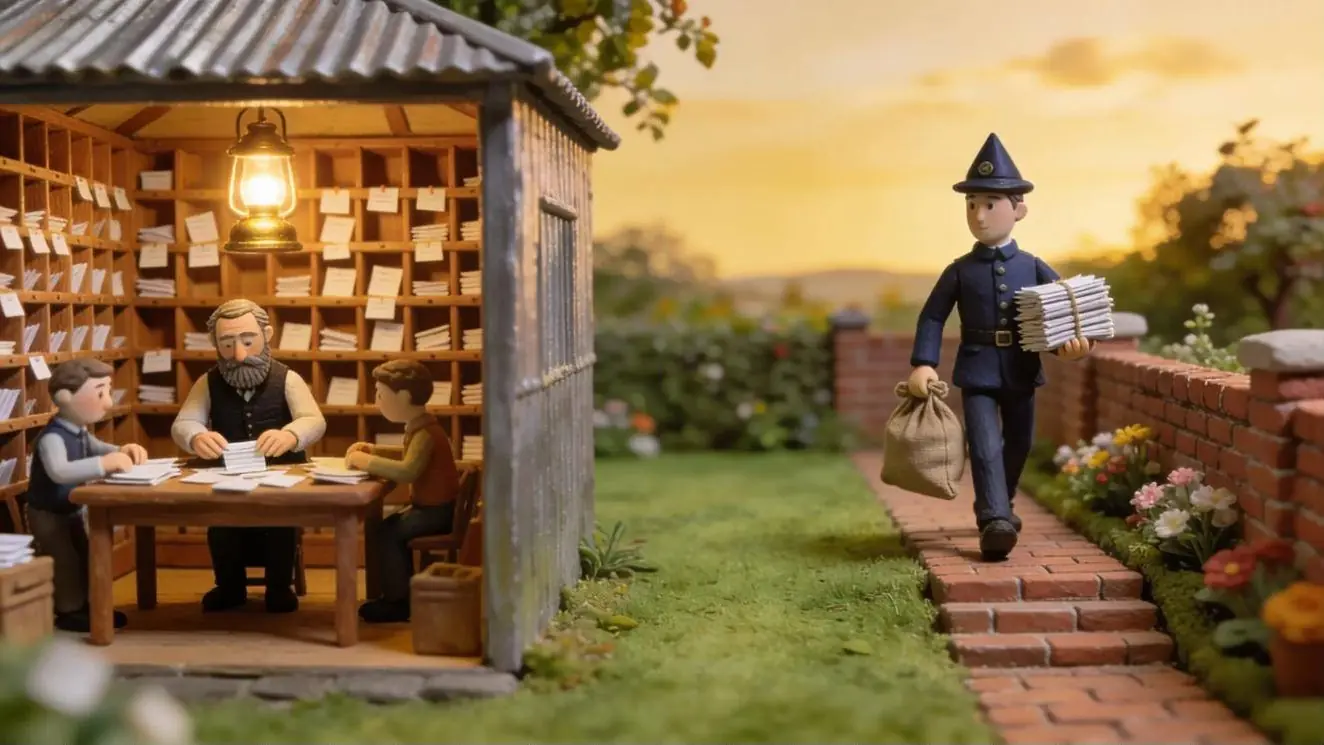
In 1857 the Philological Society in London set itself an enormous job: to record every word in the English language, when it was first written down and how its meaning had changed since. No team of scholars could read that much. So they asked for volunteers. Read any book you like. When you find a word in use, copy out the sentence onto a slip of paper. Post it in.
For twenty years progress was slow. Then in 1879 they found their man. James Murray was a draper's son from Denholm in the Scottish Borders. He had left school at 14 because his parents couldn't afford the fees. Now he was teaching at Mill Hill School in north London. In the school grounds he built a corrugated-iron shed. He called it the Scriptorium. Then he wrote to the whole country: "A thousand readers are wanted."
A year later, 754 readers had signed up. The slips poured in, from all over the British Isles, from Europe, from America and from Australia. One man, Thomas Austin, sent in around 165,000 on his own. The astronomer Elizabeth Brown and her sister Jemima sent in more than 7,000 between them. Readers were asked not to bother with the Bible, Shakespeare or Edmund Burke. Those had been covered already. Murray kept an address book of his contributors, noting their marriages, their deaths and the books they read for him.
Murray moved to Oxford. So many letters passed through his house on the Banbury Road that the Post Office put up a pillar box outside it. It is still there. It is still in use.
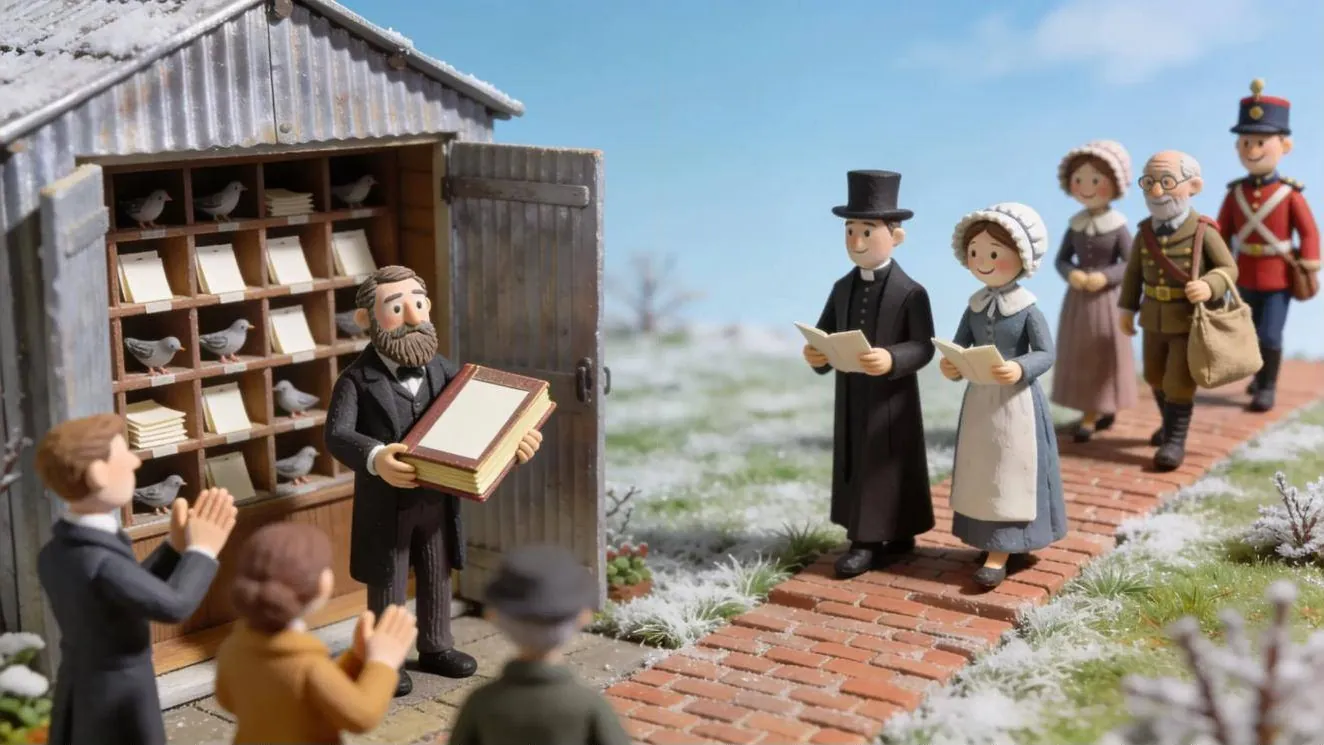
The dictionary was meant to take about ten years. The first part came out on 1 February 1884. It got as far as the word "ant". Murray died in 1915, still at work on it. The last part appeared in 1928.
It defined 414,825 words. Around five million quotations had been gathered to build it, most of them by volunteer readers nobody ever paid.
The story of your own language was pieced together by strangers with a pen, a pile of books and a stamp.
Why This Matters
The OED is still the great record of the English language, tracing words back to their earliest known use. It exists because thousands of ordinary readers gave their spare hours to it, most with no academic title at all. It was one of the great crowdsourced projects, long before the word existed. A draper's son who left school at 14 led it for 36 years. Its story shows what people can build together when they are simply asked to help.
Key Facts
- ✓Murray's 1879 appeal said: A thousand readers are wanted (Examining the OED, Hertford College)
- ✓A year after the appeal, Murray reported 754 readers (Examining the OED, Hertford College)
- ✓Murray, a draper's son from Denholm, left school at 14 and built a corrugated-iron Scriptorium at Mill Hill School (Wikipedia)
- ✓Elizabeth Brown, with her sister Jemima, contributed over 7,000 quotation slips (Penguin Books UK)
- ✓The first part, covering a to ant, appeared on 1 February 1884 and the final volume in 1928 (Country Life)
- ✓The pillar box outside Murray's Oxford home is still in use (Country Life)