The Full Story
2 small lines. The equals sign. It sits in every equation on Earth. A Welshman drew it first. He died in a debtors' prison.
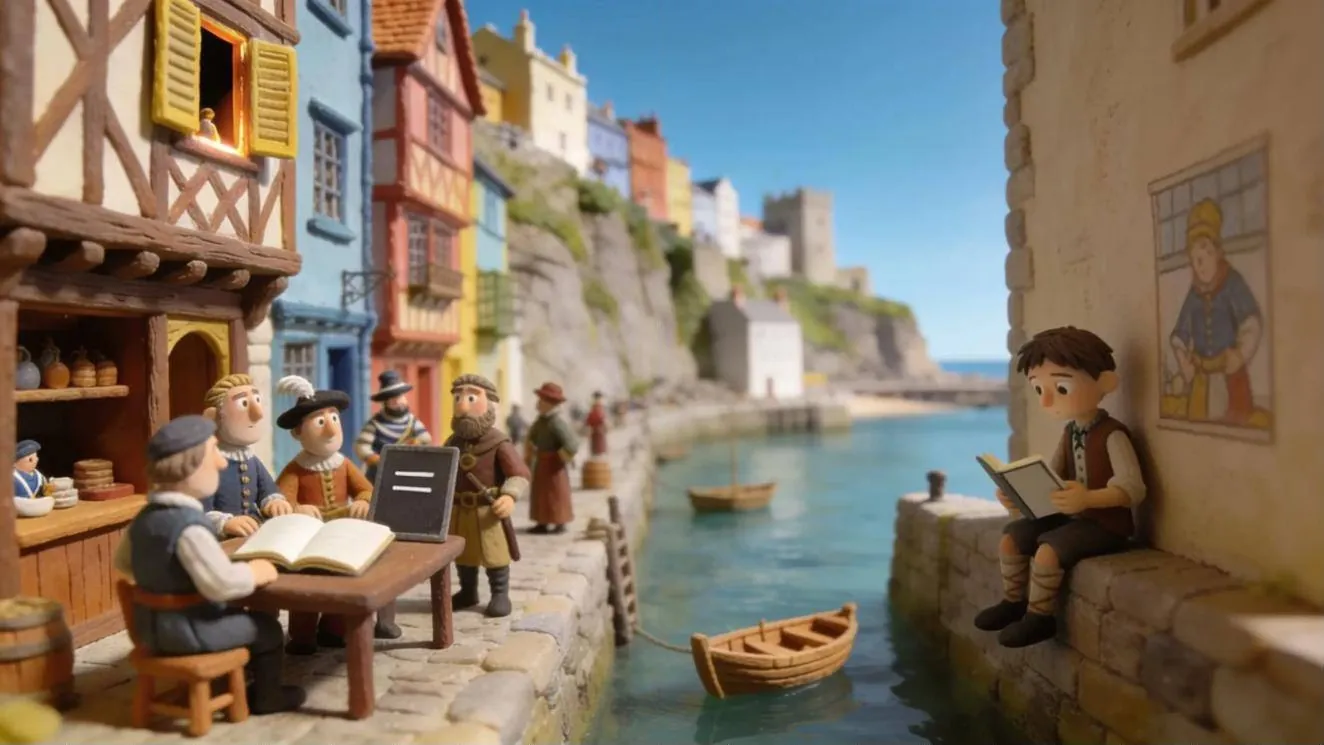
His story starts in Tenby, a harbour town on the Welsh coast. Robert Recorde, a merchant's son, born around 1512. Oxford made him a fellow, then Cambridge a doctor of medicine. But learning lived in Latin, locked away from people like his. So he wrote his mathematics in plain English, as a friendly talk between a master and his pupil. The Ground of Artes, 1543. Arithmetic for anyone. Sailors learned from it. Shopkeepers. Merchants' clerks. Britain kept it in print for 150 years.
The crown noticed and gave him the royal mint at Bristol. Then a powerful soldier came demanding the king's money for his army. Sir William Herbert, a hard man, close to the throne. Recorde asked for the king's warrant. None came. So the mathematician refused the soldier. Herbert called it treason. Recorde spent 60 days under guard. He was released. The grudge was not.
The crown sent him to Ireland next, to run its silver mines. The mines failed. He came home unpaid. And the soldier he had refused was now the Earl of Pembroke. In 1556, Recorde accused the earl of misconduct at the crown's mints. True or not, it was a fight a scholar could not win. Pembroke sued him for libel. The court awarded the earl 1,000 pounds, money Recorde did not have.
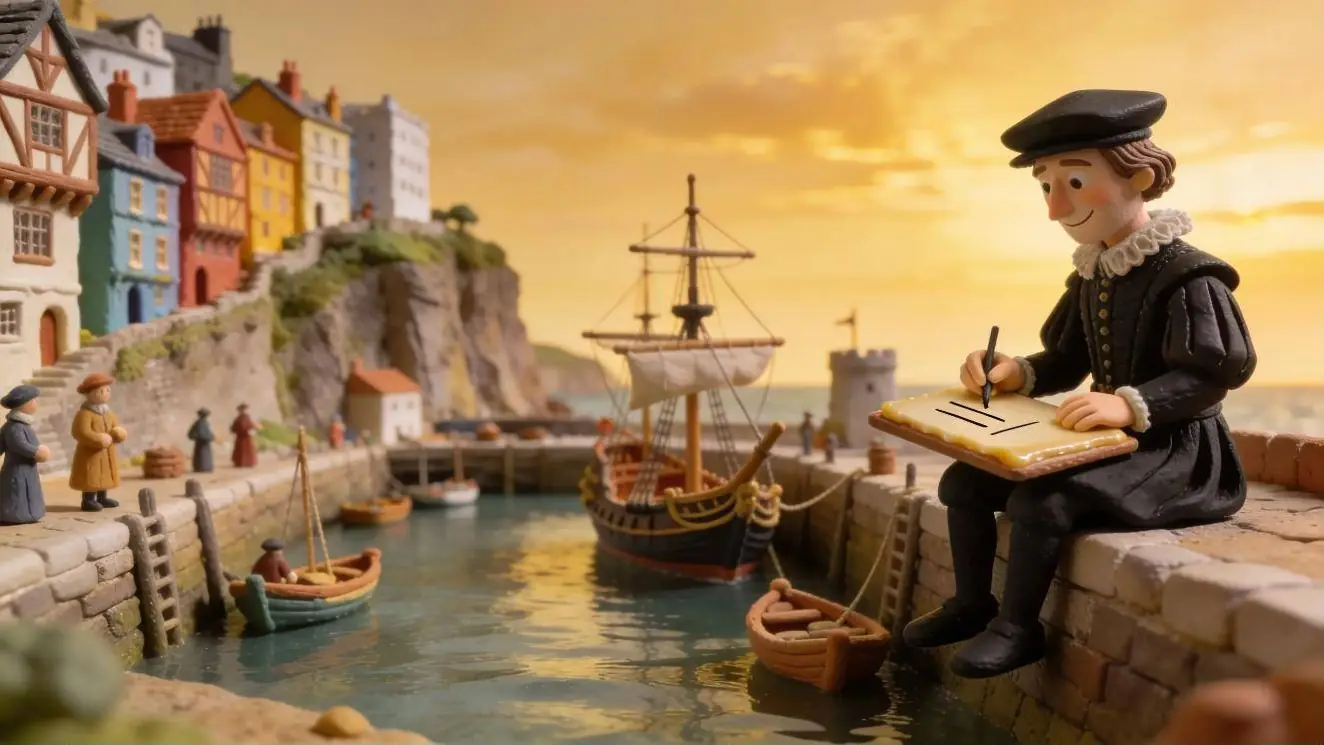
With ruin hanging over him, he wrote one last book. The Whetstone of Witte, the first English book of algebra. Page after page, he tired of writing the words 'is equal to'. So he drew 2 parallel lines instead, because, he wrote, no 2 things can be more equal. The equals sign. Born on a page in 1557.
Within months, they came for him. The King's Bench prison, Southwark, a gaol for debtors. He died there in 1558. The crown itself still owed him 1,000 pounds, for Ireland. It paid the debt 12 years after his death.
Yet his 2 lines sit today under every child's sum on Earth.
Why This Matters
Robert Recorde believed learning should belong to everyone, not just those who could read Latin, so he wrote mathematics in plain English for sailors, shopkeepers and clerks. He was ruined by a single powerful man he refused to hand crown money to without proper authority. He died owed a fortune by the crown he had served. His two lines outlived the earl's verdict and now sit under every sum a child in Britain writes. The channel exists to put a name back to that symbol: not an abstraction handed down by history, but the last work of a Welshman who wrote plainly, was ruined by power and left something more equal than any court ever gave him.
Key Facts
- ✓Robert Recorde was born in Tenby, Pembrokeshire, around 1512, the son of a Tenby merchant and became a fellow of All Souls College, Oxford, in 1531 before taking a medical doctorate at Cambridge (Dictionary of Welsh Biography; MacTutor)
- ✓His 1543 book The Ground of Artes taught arithmetic in plain English as a dialogue between master and pupil and remained in print for around 150 years (Wikipedia; MacTutor)
- ✓As comptroller of the Bristol mint he refused Sir William Herbert crown money without a royal warrant in 1549; Herbert accused him of treason and he was held for 60 days (Dictionary of Welsh Biography; Wikipedia)
- ✓After overseeing the crown's failed Irish silver mines unpaid, Recorde accused the by-then Earl of Pembroke of misconduct in 1556; Pembroke sued for libel and won £1,000 in damages in February 1557 (Dictionary of Welsh Biography; Wikipedia)
- ✓His 1557 book The Whetstone of Witte, the first English book of algebra, introduced the equals sign, two parallel lines, 'bicause noe 2 thynges, can be moare equalle' (Wikipedia; MacTutor)
- ✓He was committed to the King's Bench debtors' prison in Southwark and died there in 1558; the crown paid the £1,000 it owed him for his Irish service to his estate 12 years later, in 1570 (Wikipedia; Dictionary of Welsh Biography)