The Full Story
Rochdale, Lancashire, deep in the Hungry Forties. The cotton mills run day and night and the weavers still go hungry.
That year they struck for better pay and lost. Even the food they can afford cheats them: chalk in the flour, sand in the sugar, a thumb on the scales. Most of them cannot vote. But no law stops them keeping a shop.
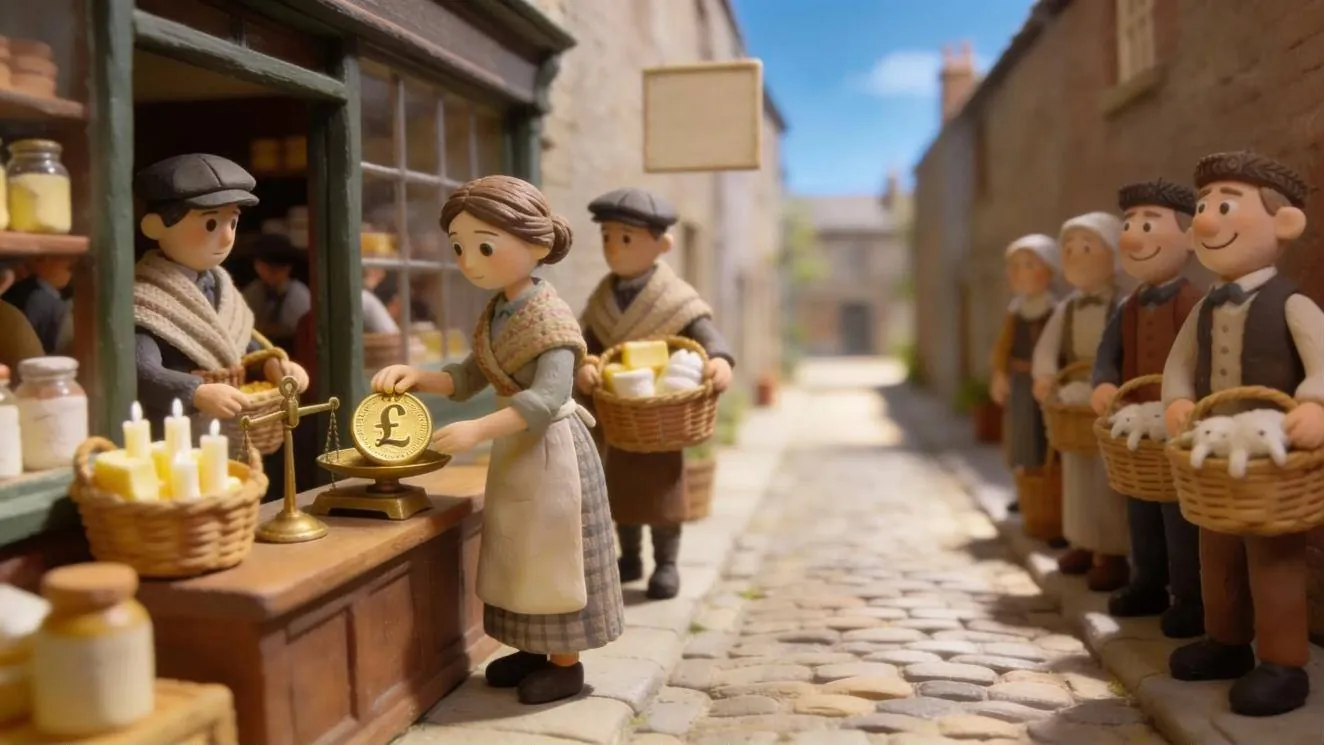
So 28 of them, weavers and tradesmen, put their names to a list and call themselves the Equitable Pioneers. The stake is £1 a member, weeks of wages for a weaver, saved in pennies through the hungry months until they have about £28 between them. Enough to rent the ground floor of a worn old warehouse at 31 Toad Lane.
Before they open, a warper named Charles Howarth writes them rules. One member, one vote. A woman's membership equal to a man's. Full weight and honest measure. Only the purest food they can buy. And one rule nobody has made work before: the dividend. Profits handed back to the shoppers, in proportion to what they spend. The customer becomes the owner.
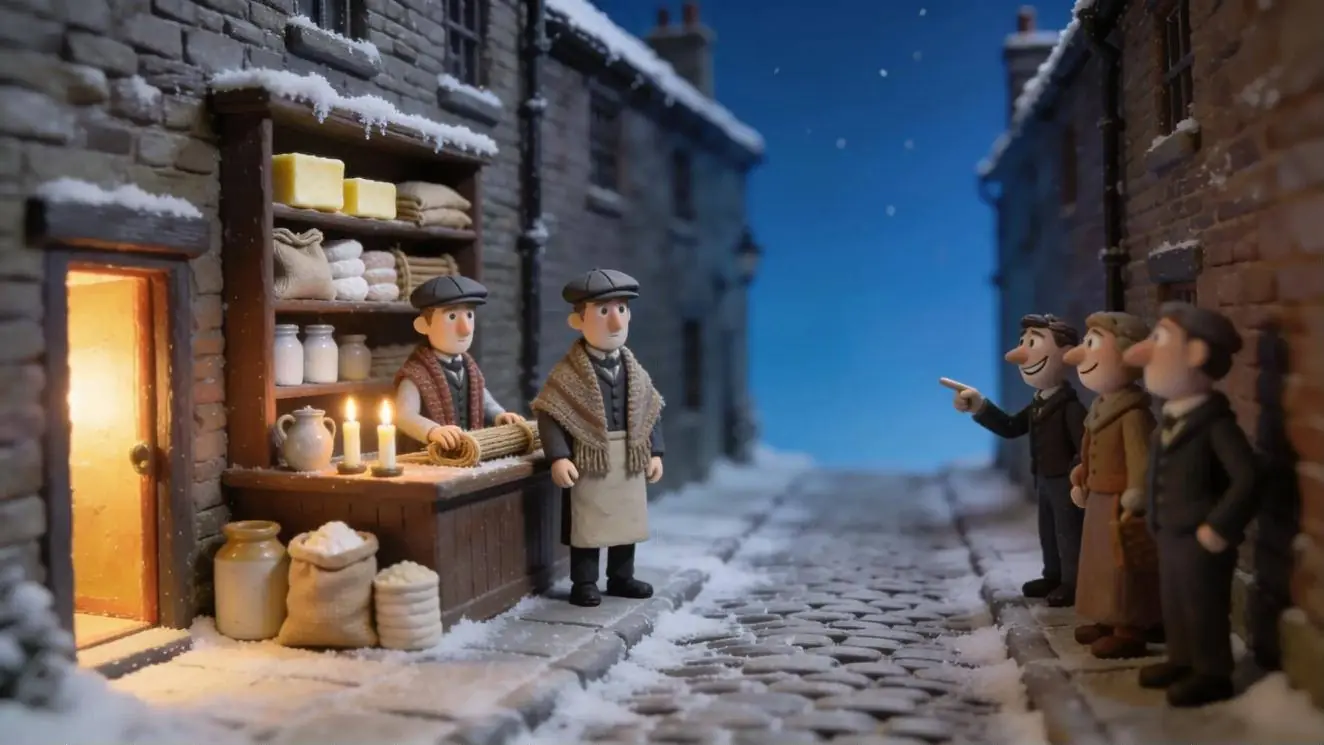
They open at 8 o'clock on 21 December 1844, lit by their own candles because the gas company has refused them. The lads jeer through the window. The Pioneers weigh out their butter anyway. Full weight.
It holds. A year on, 74 members and £710 through the till. In 1846 a weaver named Eliza Brierley pays in her own £1. Her vote counts the same as any man's, 82 years before Parliament matches it.
Town after town copies the rulebook, then country after country. Today around 3 million co-operatives run on rules that began in that shop, with around 1 billion members. 1 person in every 8 alive.
And the little shop still stands. 31 Toad Lane is the Rochdale Pioneers Museum now, kept much as the Pioneers knew it, counter, scales and all.
Why This Matters
Co-operation had been tried before Rochdale. It had mostly failed. What made this attempt different was not grand theory but one practical rule: profits paid back to the shoppers who spent them, so the customer became the owner. 28 weavers and tradesmen, excluded from a fair wage and mostly from a vote, built the thing power had denied them instead of waiting for it. They asked for nothing but honest weight and were laughed at for it. Today around a billion people, roughly 1 in 8 of everyone alive, belong to a movement descended from that candlelit counter. It is a British story with no lords or generals in it, only ordinary people who wrote their own rules and made them work. That is worth remembering properly.
Key Facts
- ✓The Rochdale Society of Equitable Pioneers was founded by 28 weavers and tradesmen in Rochdale, Lancashire, in 1844, in the wake of a failed strike for better pay (Wikipedia; International Co-operative Alliance)
- ✓The Pioneers raised their capital in £1 shares, saved through weekly subscriptions, until they had about £28 between them (Rochdale Pioneers Museum; Wikipedia)
- ✓Their shop opened at 31 Toad Lane on 21 December 1844, selling only butter, sugar, flour, oatmeal and candles, lit by their own candles after the gas company refused to supply them (Wikipedia; International Co-operative Alliance)
- ✓Charles Howarth drafted the society's rules, including one member one vote, equal membership for women, full weight and pure food plus the dividend on purchase that returned profits to shoppers (Wikipedia)
- ✓Eliza Brierley became the Pioneers' first woman member in March 1846, paying her own £1 share (International Co-operative Alliance)
- ✓Today around 3 million co-operatives worldwide, with more than 1 billion members, trace their principles back to the Rochdale Pioneers. Today 31 Toad Lane is preserved as the Rochdale Pioneers Museum (International Co-operative Alliance; Rochdale Pioneers Museum)