The Full Story
How do you know anything is true? For most of history the answer was simple: because someone important said so. A king. A bishop. An old book.
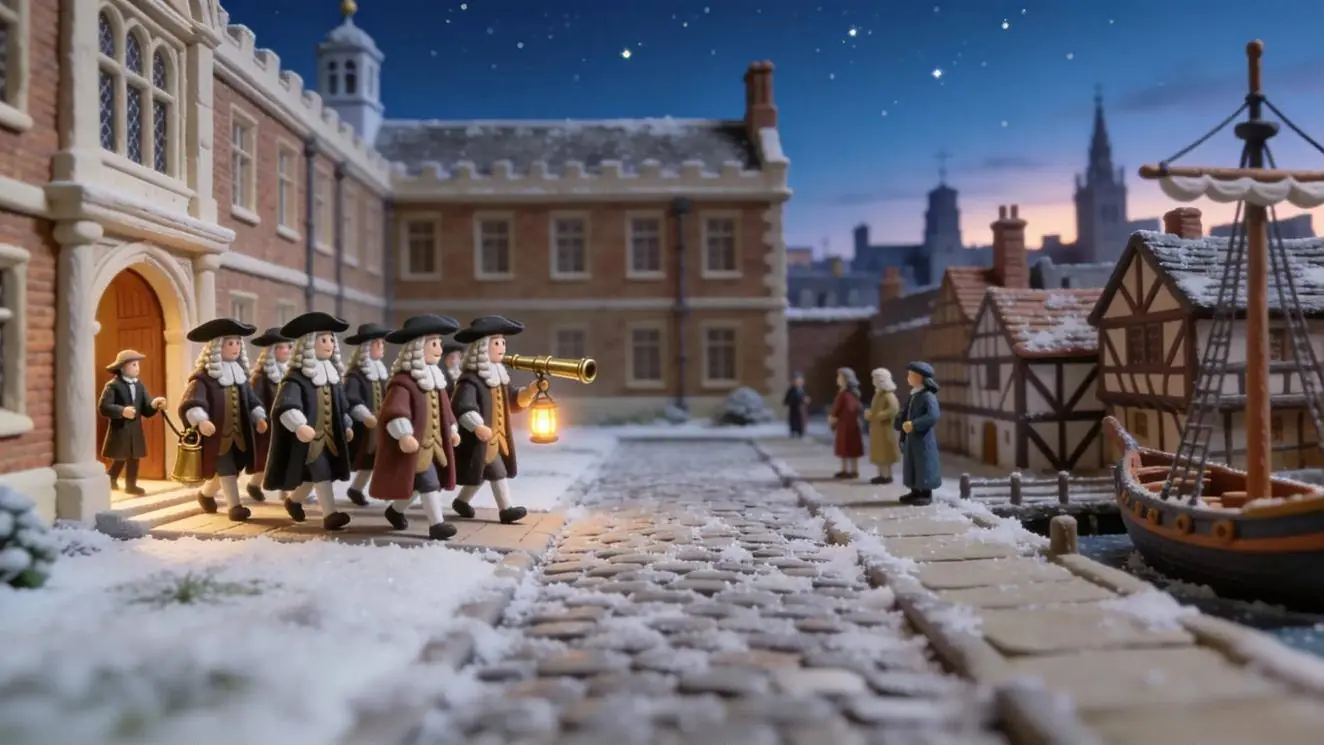
Then on the 28th of November 1660, twelve men met after a lecture at Gresham College in London. They had just heard the college's young Professor of Astronomy, Christopher Wren, the man who would later design St Paul's Cathedral. They decided to found a society for learning by experiment.
Within two years King Charles II had granted them a royal charter. They took a motto of three Latin words: Nullius in verba. Take nobody's word for it. Not the king's. Not the church's. Not even each other's. If you said something was true, you had to show it.
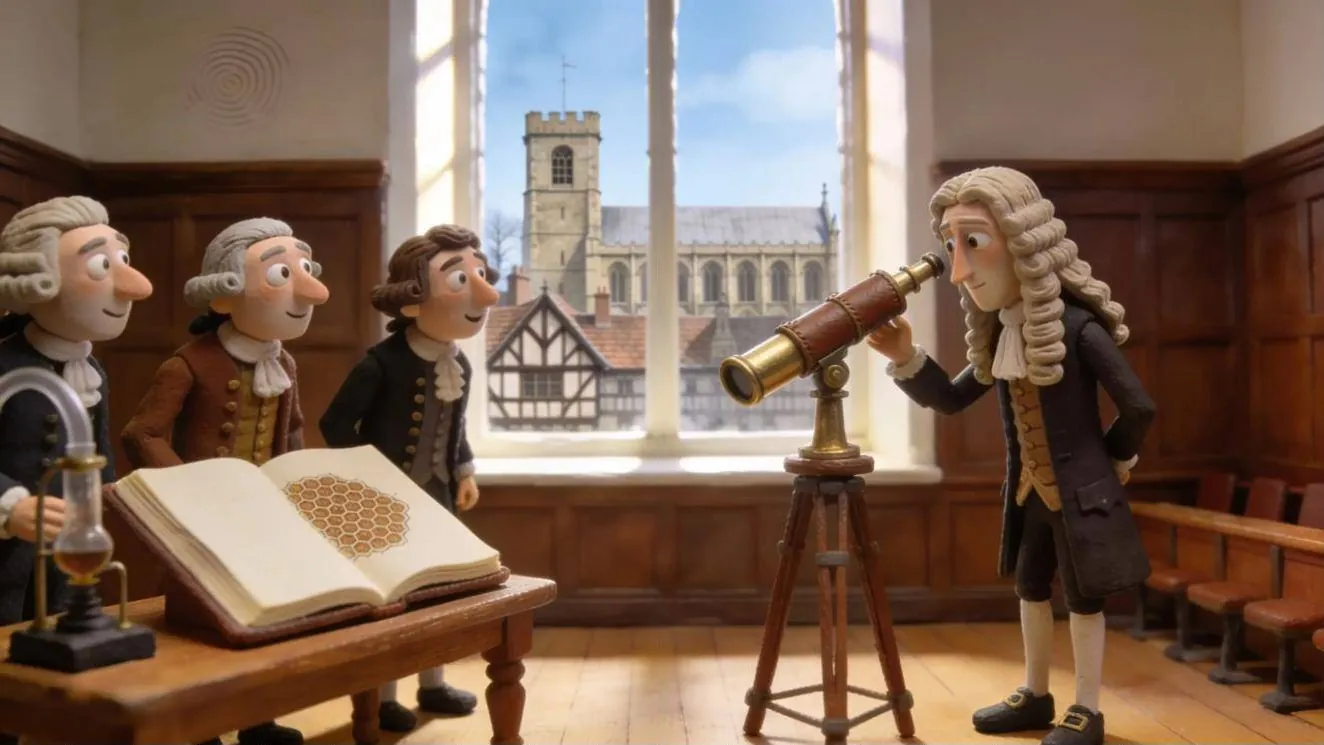
So they hired a man to do exactly that. Robert Hooke, a clergyman's son from Freshwater on the Isle of Wight, became their Curator of Experiments in 1662. Week after week he put on experiments at their meetings. Prove it, or it doesn't count.
One day Hooke looked down a microscope at a thin slice of cork. It was full of tiny boxes, like a honeycomb. They reminded him of the small rooms monks lived in, so he called them cells. Every cell in your body takes its name from that moment.
His book, Micrographia, came out in January 1665. Samuel Pepys sat up until two in the morning reading it. He called it the most ingenious book he had ever read in his life. That March the Society's secretary, Henry Oldenburg, launched Philosophical Transactions so that findings could be printed for anyone to read. It is still published today: the world's first and longest-running scientific journal. In 1687 Isaac Newton's great book on gravity, the Principia, came out under the Society's name.
Take nobody's word for it went round the world. It's why medicines are tested before you take them. It's why scientists have to show their working. It's why the truth doesn't belong to whoever shouts loudest.
The Royal Society still meets, more than 360 years later. It all started with a room full of curious people in London agreeing to check each other's homework.
Why This Matters
The Royal Society turned a simple idea into a habit the whole world now relies on: claims must be tested and shown, not simply asserted. Its motto set the standard for modern science. Its journal helped establish the idea of publishing results so others can check them. Hooke's work gave biology one of its most basic words. Every drug trial and every scientist asked to show their data owes something to a rule agreed in London in the 1660s. It is also the rule this channel tries to live by.
Key Facts
- ✓The Society's first meeting was on 28 November 1660, after a lecture by Christopher Wren, Gresham Professor of Astronomy (The Royal Society)
- ✓Twelve founding men attended that first meeting (MacTutor, University of St Andrews)
- ✓The motto Nullius in verba, taken to mean take nobody's word for it, was adopted in the First Charter of 1662 (The Royal Society)
- ✓Hooke named cells after the small rooms of a religious house, having seen cork was porous like a honeycomb (UCMP Berkeley)
- ✓Pepys sat up till two o'clock reading Hooke's book and called it the most ingenious book he had ever read (The Diary of Samuel Pepys)
- ✓Philosophical Transactions, launched in March 1665, is the world's first and longest-running scientific journal (The Royal Society)