The Full Story
There's a hospital in London that has cared for the sick on the same spot for 900 years. It's still open today. No hospital in Britain has served its original site for longer.
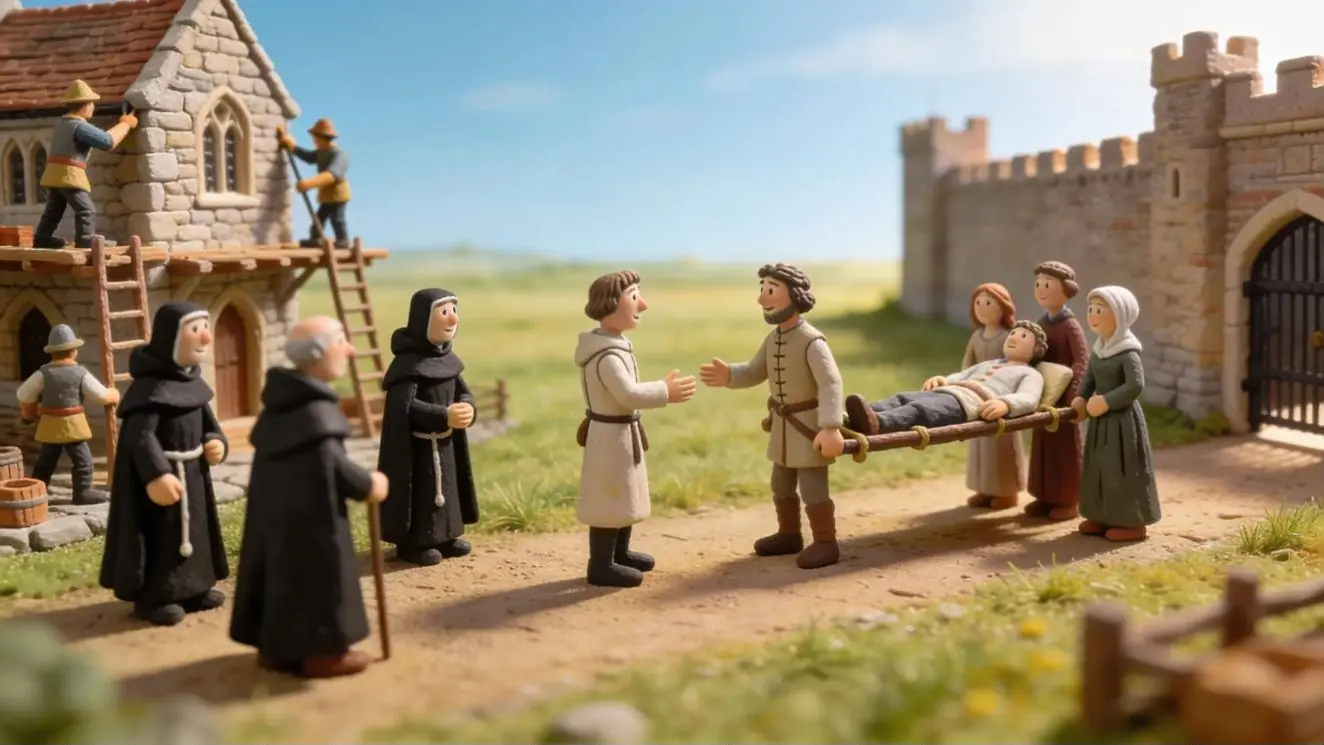
Rahere was a courtier of King Henry I. Around nine centuries ago he went on a pilgrimage to Rome. There he fell so ill he believed he was going to die. So he made a vow: if he lived, he would build a hospital for the poor. He lived. The story goes that St Bartholomew then came to him in a vision and told him where to build.
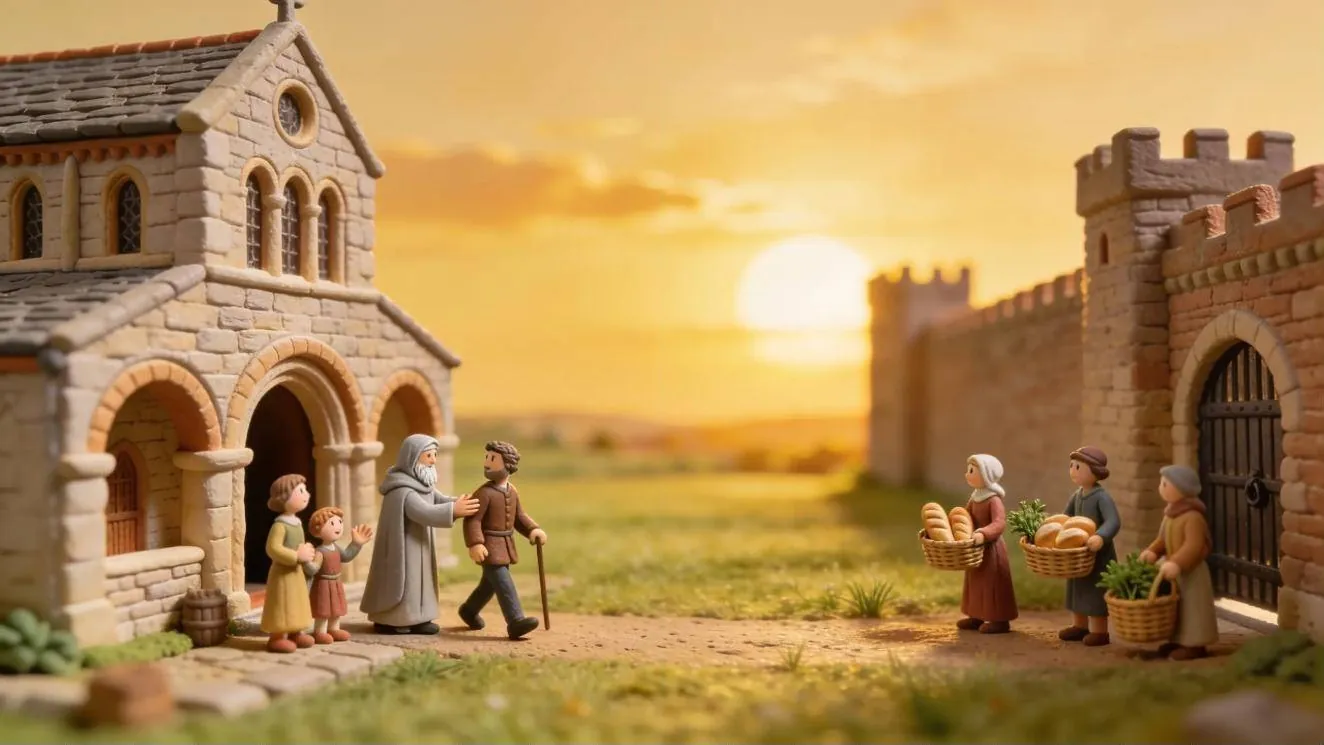
Henry I granted him land at Smithfield, just outside the city wall. In 1123 Rahere kept his word. St Bartholomew's Hospital was born, alongside a priory. He ran it for around twenty years.
Then the centuries came. When Henry VIII dissolved the monasteries, the priory was closed in 1539. Its property was taken. The hospital kept caring for the sick but lost its income. Londoners petitioned the king to save it. In December 1546, only weeks before he died, Henry refounded the hospital and handed it to the City of London. Its official name became the House of the Poore in West Smithfield. It kept that name until the NHS arrived in 1948. Henry's statue still stands over the hospital gatehouse, built in 1702. Barts calls it London's only public statue of the king.
In 1666 the Great Fire of London stopped short of the hospital. In the Blitz, bombs fell all around it. Barts survived both. Through all of it, the care never stopped.
One of its physicians, William Harvey, worked out how blood goes round your body. The painter William Hogarth covered its great staircase with two huge paintings, The Pool of Bethesda and The Good Samaritan. He charged nothing. He wanted to prove an English painter could match the Italians the hospital had been thinking of hiring.
Rahere is buried a stone's throw away, in the church of St Bartholomew the Great, which he also founded. He lies a few steps from the promise he kept.
Next time you're near Smithfield, look up at the gate.
Why This Matters
Barts is the oldest hospital in Britain still caring for patients on its original site. Its story shows that looking after strangers is not a modern idea in this country. A promise made by one man in 1123 was kept alive by Londoners who refused to let it close, by physicians like William Harvey and by an artist who painted for nothing. Long before the NHS, people here had already decided that the sick poor deserved care. That idea has outlived kings, fire and bombs.
Key Facts
- ✓Rahere, a courtier of Henry I, fell ill on pilgrimage to Rome and vowed to build a hospital for the poor (Barts Health NHS Trust)
- ✓Henry I granted Rahere land at Smithfield, just outside the city walls (London Museum)
- ✓The priory was dissolved in 1539 (Senate House Library)
- ✓Henry VIII refounded the hospital in December 1546, granting it to the City of London (Wikipedia)
- ✓Hogarth painted the staircase canvases without a fee (Wikipedia)
- ⚠Barts describes the gatehouse figure as London's only public statue of Henry VIII. Some London historians point to a second outdoor statue of him at New Palace Yard, Westminster, so the claim is disputed.