The Full Story
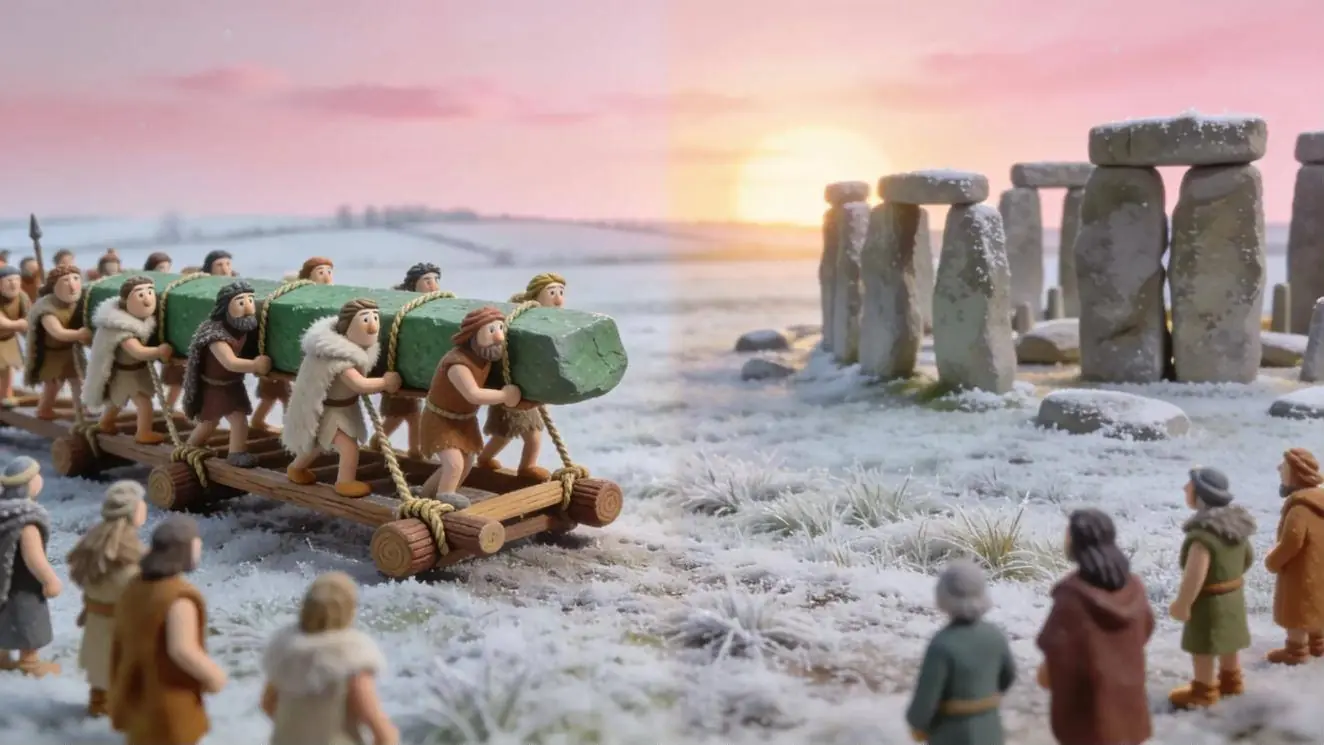
Around 4,500 years ago, someone moved a six-tonne stone from the far north-east of Scotland to Salisbury Plain. Nobody knows exactly how.
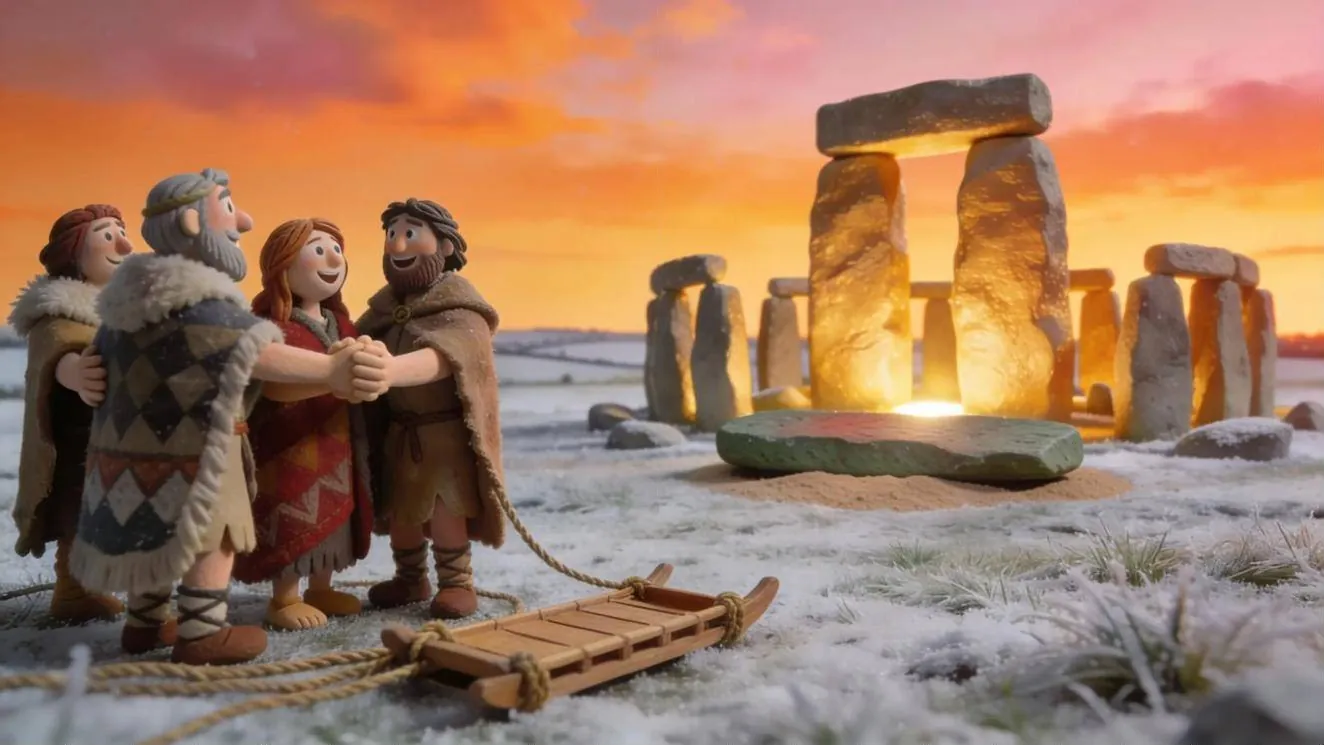
It is the stone lying flat at the heart of Stonehenge, beneath two bigger sarsens. It is called the Altar Stone. It is a block of sandstone about five metres long, one metre wide and half a metre thick. It is easy to walk straight past.
For a century everyone thought it was Welsh. Most of the giant sarsens came from West Woods, a short haul to the north. Most of the smaller bluestones came from the Preseli Hills in west Wales, a journey that was already hard enough to believe. The Altar Stone was assumed to have come from Wales too. It never quite fitted.
In 2024 a team led by Anthony Clarke of Curtin University in Australia, working with scientists from Aberystwyth University and elsewhere, published the answer in Nature. They dated tiny grains of zircon, rutile and apatite in thin slices of the stone. The grains worked like a fingerprint. They matched the Old Red Sandstone of the Orcadian Basin in north-east Scotland. That is at least 750 kilometres from Stonehenge, about 466 miles in a straight line.
Later that year a second study ruled out mainland Orkney. The hunt for the exact spot in north-east Scotland goes on.
How did it travel? Hauling six tonnes overland from Scotland would have meant crossing some formidable natural barriers. The researchers think it was more likely moved by sea, along the coast of Britain. That would still have been a daunting voyage. The route and the method remain unknown.
The discovery changes how we see the people who built Stonehenge. They were not only Wiltshire people. The team behind the study says moving the stone shows "a significant level of societal coordination during the Neolithic period." Communities in the far north and the far south were connected, working towards the same monument, thousands of years before anyone called this island Britain.
The Altar Stone is still there, flat in the middle of the circle. Next time you visit, look for it. It came the length of the island.
Why This Matters
Stonehenge is often treated as a wonder of Wiltshire. The Altar Stone shows it was something bigger. Communities in north-east Scotland and on Salisbury Plain were linked closely enough to move a six-tonne block between them. That points to long-distance networks and shared purpose across the island more than 4,000 years ago. Long before England, Scotland or Wales existed, the people of this island were already building together.
Key Facts
- ✓The Altar Stone is a six-tonne sandstone block whose mineral grains closely match the Old Red Sandstone of the Orcadian Basin in north-east Scotland (Clarke et al., Nature, 2024)
- ✓Its source lies at least 750 km from Stonehenge (Clarke et al., Nature, 2024)
- ✓Because overland transport from Scotland faced major barriers, the authors suggest it was moved by sea (Clarke et al., Nature, 2024; Curtin University)
- ✓The stone may have been set in the central horseshoe during Stonehenge's second construction phase, around 2620 to 2480 BC (Aberystwyth University)
- ✓A follow-up study published in 2024 concluded the stone did not come from mainland Orkney but from elsewhere in north-east Scotland (Aberystwyth University)
- ⚠The film says 'nearly 500 miles' and '5,000 years ago'. The Nature paper gives at least 750 km, about 466 miles, in a straight line. The stone was probably set in place around 4,500 years ago. The film's sea route down the east coast and round Kent is a plausible guess, not an established finding.