The Full Story
For thousands of years, the brightest colours were not a matter of taste. They were a matter of money. Dyes came from plants, insects and shellfish. They were costly to make. Purple, above all, signalled wealth.
The most famous purple came from sea snails. One estimate puts it at 12,000 Murex snails for no more than 1.4 grams of pure dye. That was enough to colour only the trim of a single garment.
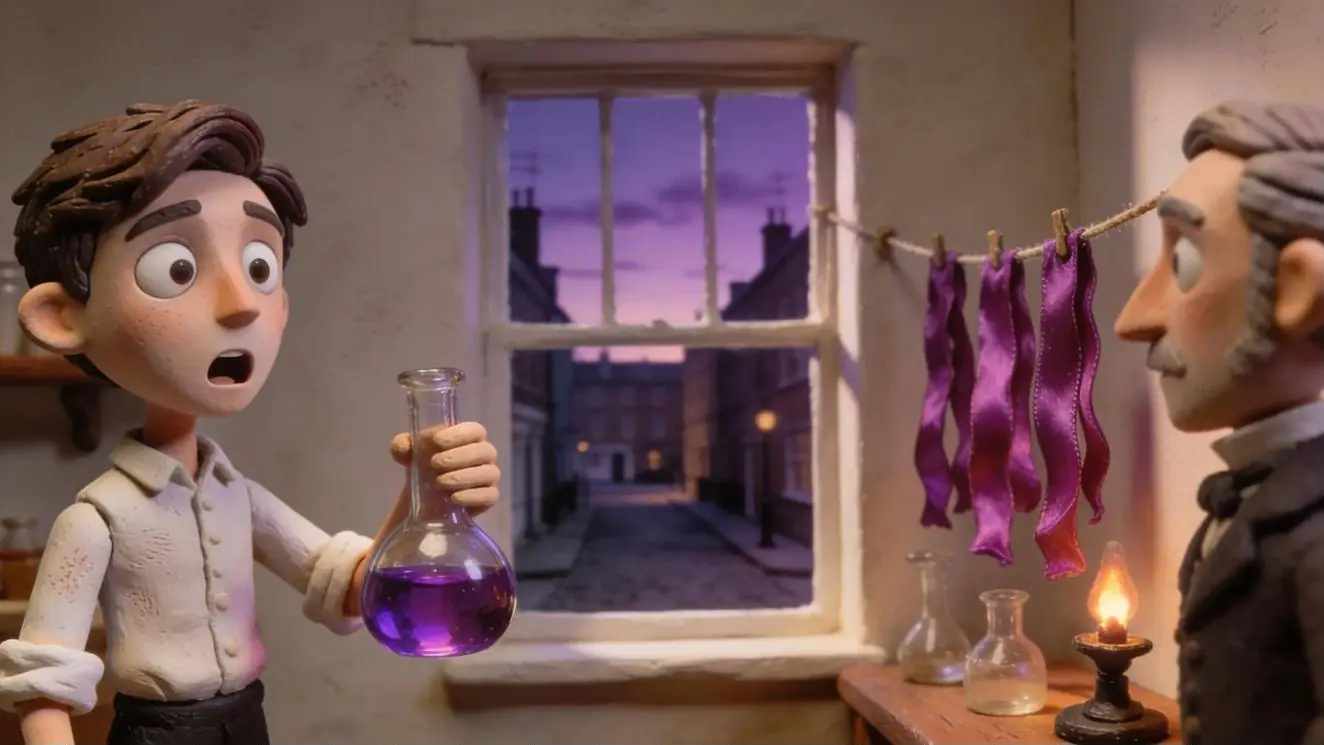
At Easter 1856, an 18-year-old called William Perkin was working in the laboratory he had set up at his family home on Cable Street, in east London. He was a student at the Royal College of Chemistry. He was trying to make quinine, the malaria medicine, using chemicals from coal tar. Coal tar was a waste product of the gas industry, given away by the people who made it.
He failed. Repeating the method with aniline gave him a black sludge. When he cleaned the flask with alcohol, the solution turned purple. It dyed silk beautifully. He had made the first synthetic dye from coal tar. He called it mauve.
He patented it on 26 August 1856, aged 18 years and five months. He left college, borrowed money from his father and built a factory at Greenford Green, near Harrow. Building began in 1857. By December that year, with Perkin aged 19, the works were supplying mauve to silk dyers.
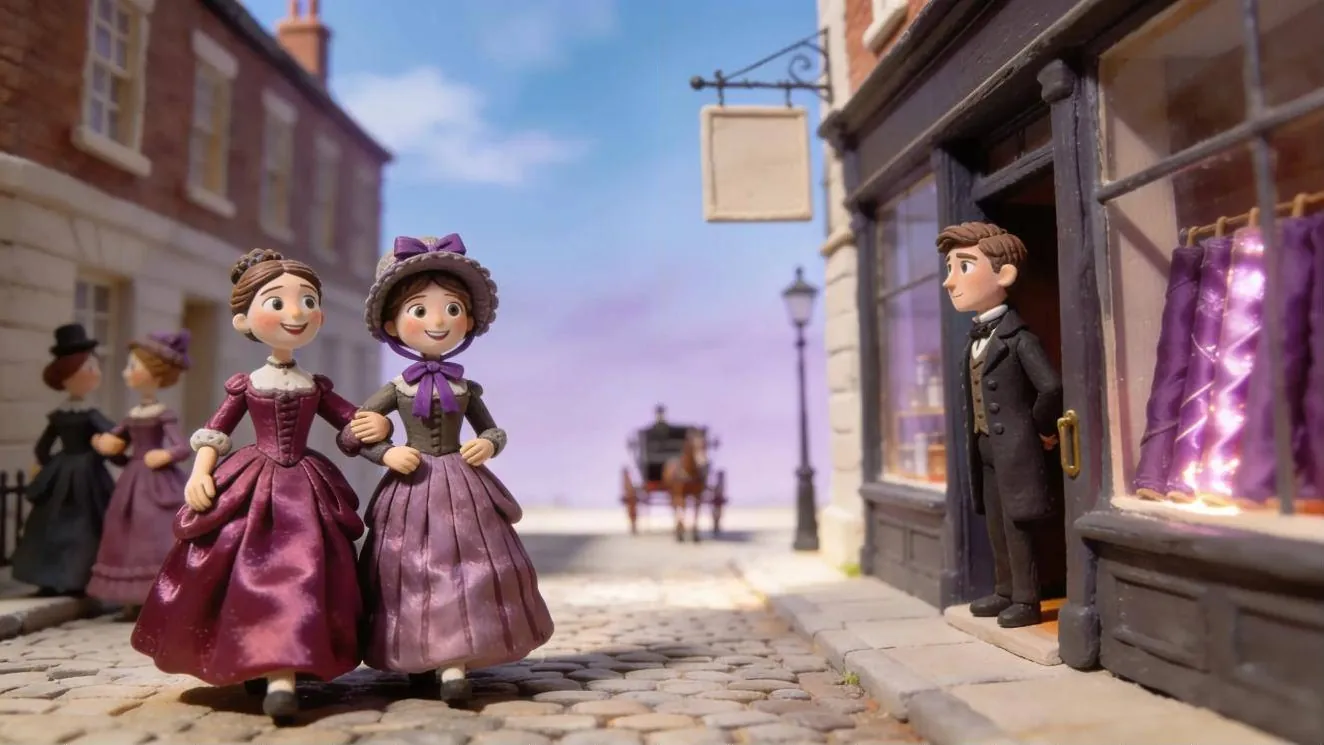
Then fashion took over. Queen Victoria was seen in the colour. So was the Empress Eugénie of France. Demand soared. A colour once tied to emperors could now be made from industrial waste on the edge of London. Bright colour began its long journey from the few to everyone.
The honest ending matters too. Britain did not keep the industry it started. Perkin's teacher, August Wilhelm von Hofmann, returned to Germany in 1865. Many of the chemists he had trained ended up in German industry. By 1914 Germany made about 90 per cent of the world's dyes. Quinine itself held out for decades more, until a formal synthesis in 1944.
Yet the coal tar chemistry Perkin opened went on to give the world medicines, perfumes and sweeteners. The colourful world you are sitting in started in a teenager's home laboratory in the East End.
Why This Matters
Perkin's accident did more than create a fashionable shade. It showed that colour, once locked away by cost, could be made cheaply from industrial waste. It also launched the synthetic chemical industry, which went on to produce medicines and countless everyday materials. His story is a reminder of British ingenuity at its most unexpected: a teenager in a home laboratory, a failed experiment and the courage to build a factory at 19. It is also an honest lesson in how quickly an early lead can be lost.
Key Facts
- ✓Perkin was born in Shadwell, London, on 12 March 1838 (Science Museum Group)
- ✓He discovered mauve in his home laboratory during the Easter vacation of 1856 while trying to make quinine (Science Museum Group; Royal Society of Chemistry)
- ✓His patent was dated 26 August 1856, when he was 18 years and five months old (Science Museum Group)
- ✓His Greenford Green works was supplying mauve to silk dyers by December 1857 (Science Museum Group)
- ✓About 12,000 Murex brandaris snails yield no more than 1.4 g of pure dye, enough only for the trim of one garment (Wikipedia, citing Jacoby 2004)
- ✓By 1914 Germany produced around 90 per cent of the world's dyes (Britannica)