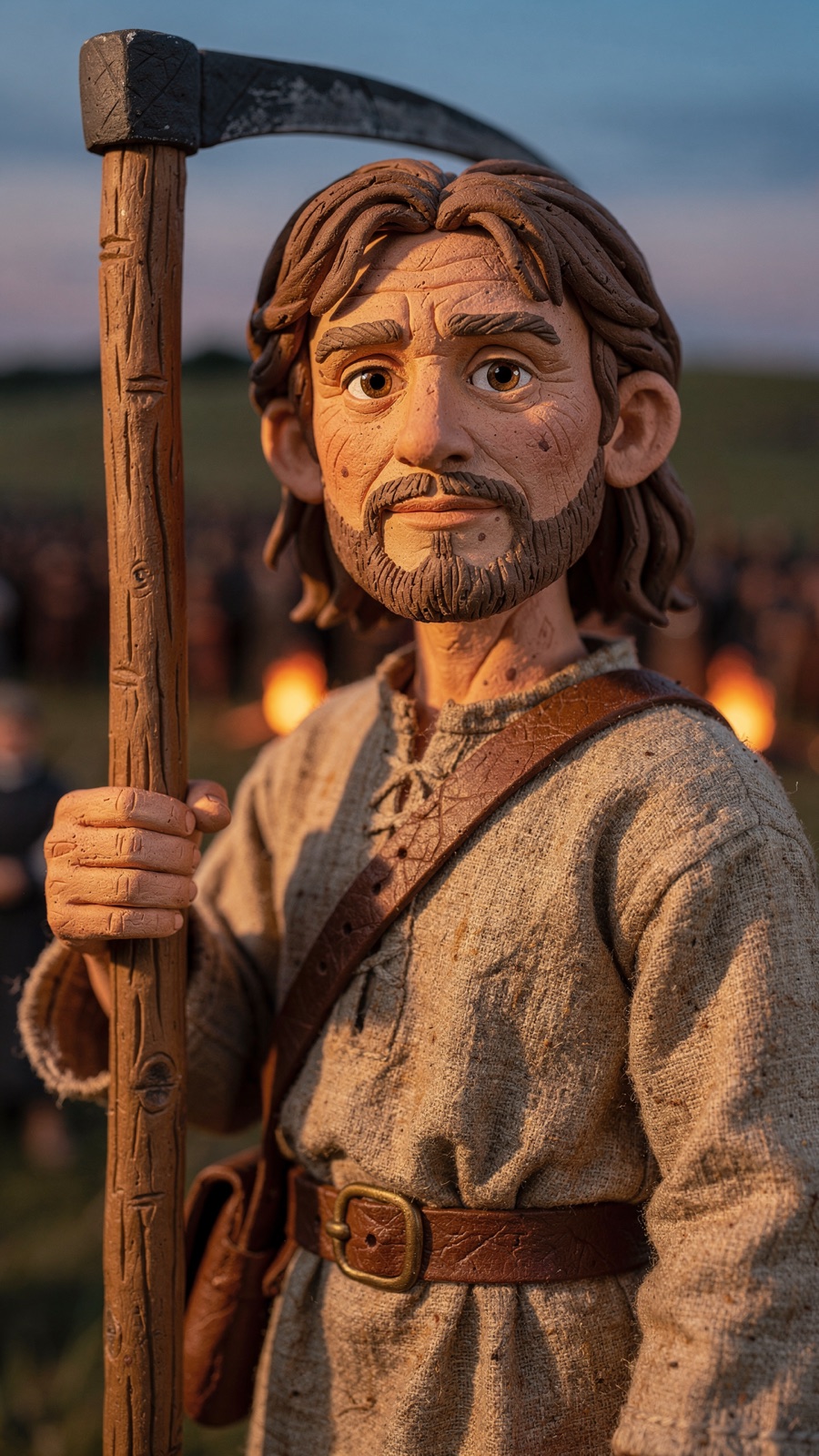
In June 1381, fifty thousand ordinary English men, women and children walked off their land, picked up the tools of their trade, and marched on London. They came from Essex. They came from Kent. They came from the eastern counties. They came because a tax commissioner had been driven out of an Essex village called Fobbing, and the king had sent soldiers, and the soldiers had been driven out too. They came because for the first time in their lives, they understood that the way things were was not the way things had to be.
They burned the Savoy Palace. They opened the prisons. They held the capital of England for three days. And then they were betrayed.
The world of 1381
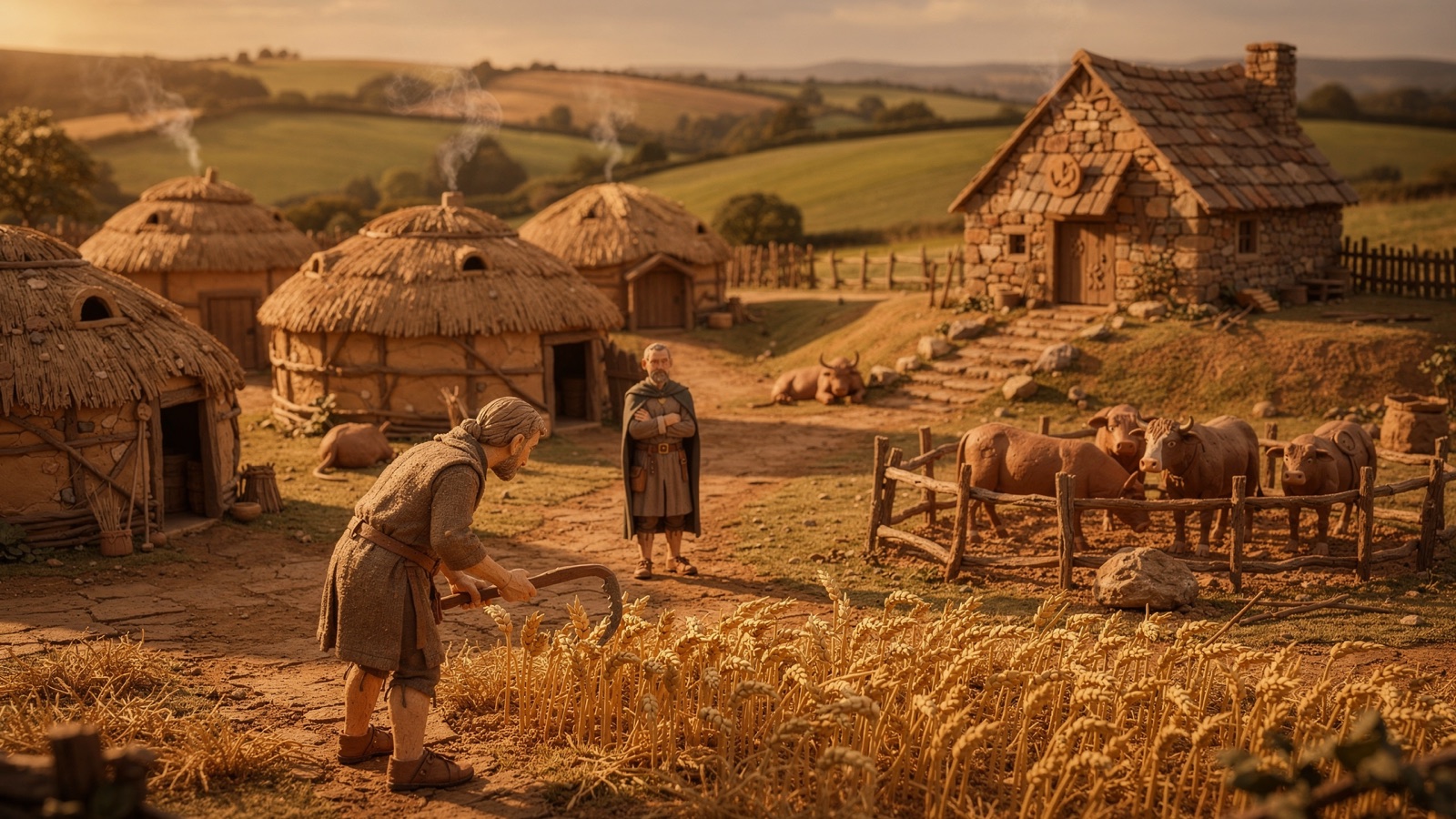
If you were born a serf in 1381, you were not a free man. You could not leave your village without permission. You could not marry without permission. You could not sell your own labour. The land you worked belonged to a lord you had never met. Your father was a serf. His father was a serf. And you had been told your son would be a serf too.
This was the system. It had stood for centuries. It was not going anywhere.
So you were told.
But something had cracked. Thirty years before 1381, the Black Death had come and killed half of England. The fields stood unsown. The harvest stood unbrought. Labour was suddenly scarce, and labour that is scarce gets paid more. For thirty years, ordinary people had been quietly getting richer. Some bought their freedom from serfdom outright. Others simply walked away. The powerful hated it. Every law they made, the people walked around. The Statute of Labourers, nailed to every market cross in England, demanded peasants work for pre-plague wages. The peasants laughed. The powerful were losing their grip.
The spark
The richest man in England in 1381 was John of Gaunt, Duke of Lancaster, the king's uncle, and he had a war with France to pay for. His answer was a tax on every adult head in England, no matter how rich or poor. The duke and the dairymaid paid the same. They called it the Poll Tax. In four years they tried it three times. The third one was one too many.
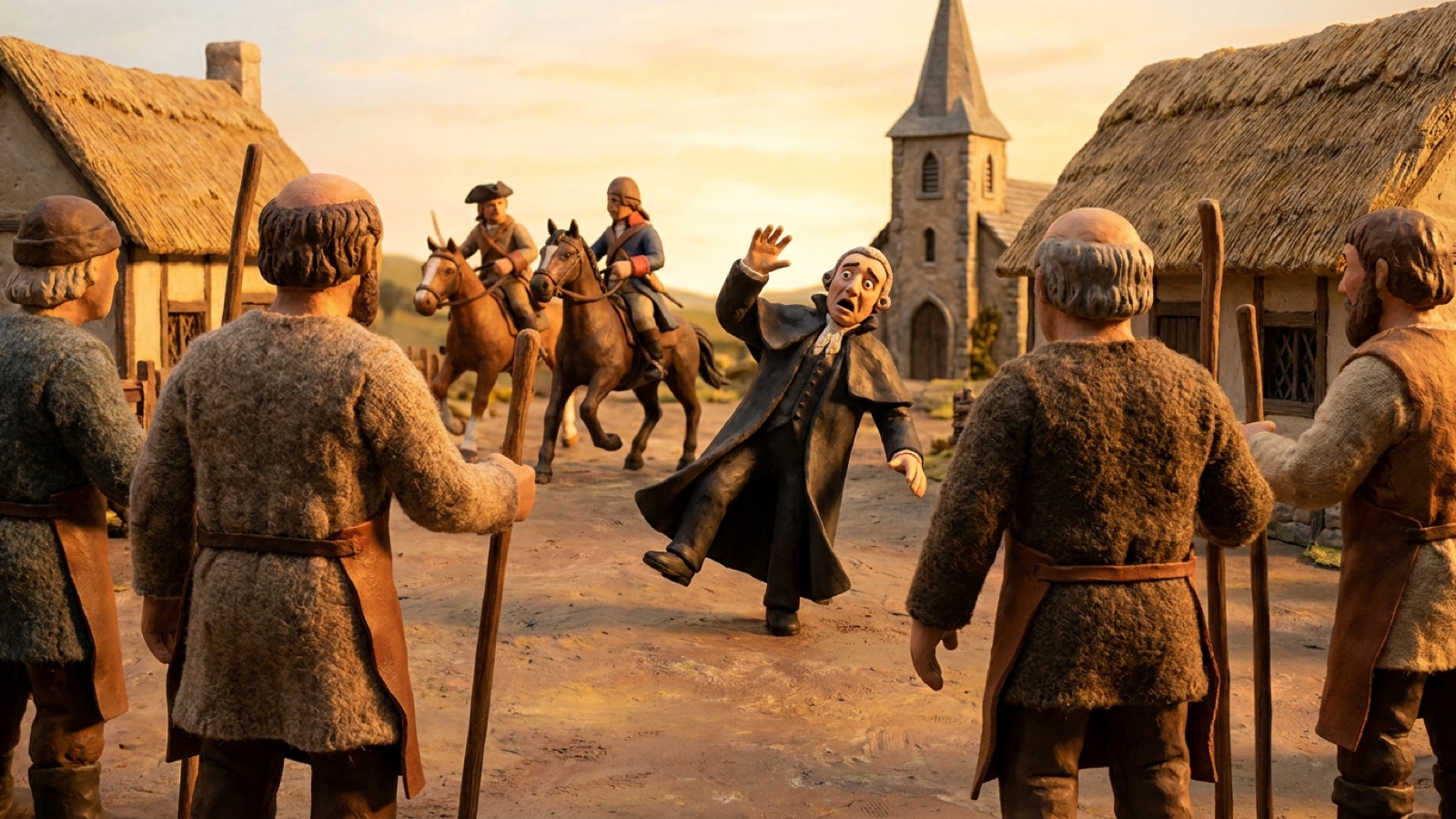
Across the country, ordinary people simply refused to register. Tax returns came back showing England had somehow lost a third of its population. So Gaunt sent commissioners to find the missing payers. In May 1381, one of them, a man called Thomas Bampton, arrived in the Essex village of Fobbing.
The men of Fobbing told him they had already paid. Bampton said they would pay again. They drove him out. The king sent soldiers to enforce the tax. The villagers drove the soldiers out too.
And word travelled.
The march
Essex rose first. Then Kent. Then the eastern counties. Villages emptied. Men with scythes and hammers. Women carrying food. Older children walking alongside their parents. In Kent, a man called Wat Tyler took command. A soldier. A tradesman. The kind of man with the bearing of someone who has fought before and worked with his hands.
His first move was to break open Maidstone Prison and free a man called John Ball, the radical priest who had been preaching against the system for years. The army that freed him began to walk to London. Every village they passed sent more.
By the time they reached Blackheath, just south of the river, they were fifty thousand strong. From farms and forges and weaver's cottages. Walking together toward London. To tell the powerful that enough was enough.
From the Tower of London, a fourteen-year-old king watched them gather. His name was Richard II. And in the Savoy Palace, the king's uncle wondered if the people would dare to come for him.
They would. They burned the Savoy Palace to the ground. Gaunt escaped on horseback to Scotland.
The question
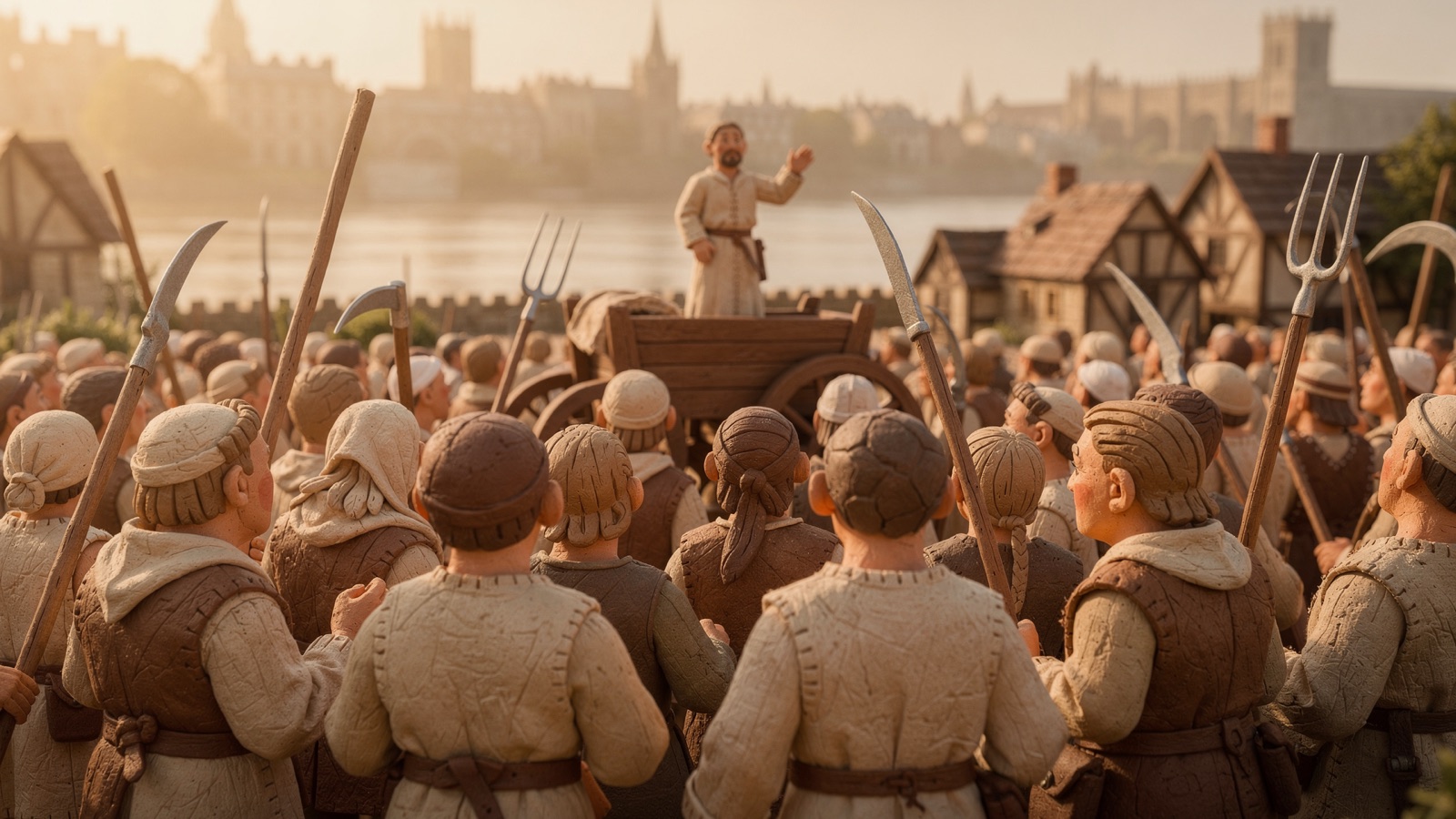
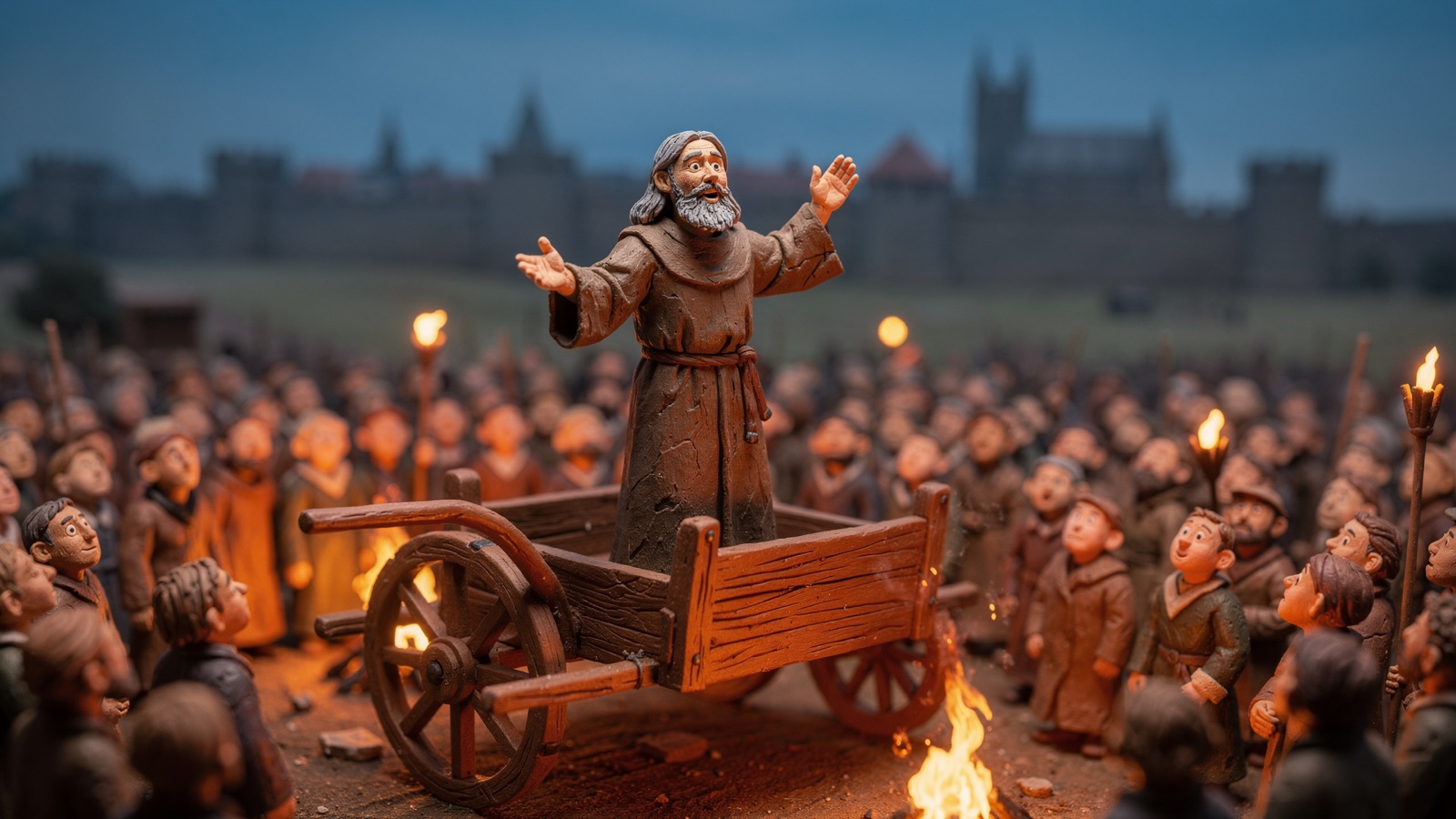
That night on Blackheath, John Ball climbed onto a cart in the centre of the gathering. Fifty thousand ordinary people held still and silent around him. And he asked them a question.
"When Adam delved and Eve span, who was then the gentleman?"
When the first man dug the earth and the first woman spun thread, there were no lords. The world was made of people. Everything else, the titles, the manors, the laws that said you could not move from your village, all of it was made by men. And what men made, men could unmake.
For the first time in many of their lives, the people gathered on that field understood that the way things are is not the way things have to be.
The promise, and the betrayal
The next morning, the king rode out to meet them. Just a boy of fourteen on a horse, in front of fifty thousand armed peasants, with no army between him and the people. At Mile End, just outside the city walls, Wat Tyler stepped forward and gave him the demands. End serfdom. End forced labour. End the Poll Tax. Pardons for everyone there. And the head of John of Gaunt.
The king agreed to all of it. He had clerks write out charters of freedom on the spot. Hundreds of them. Handed out to the rebels to take home to their villages. Sealed by the king himself. Freedom.
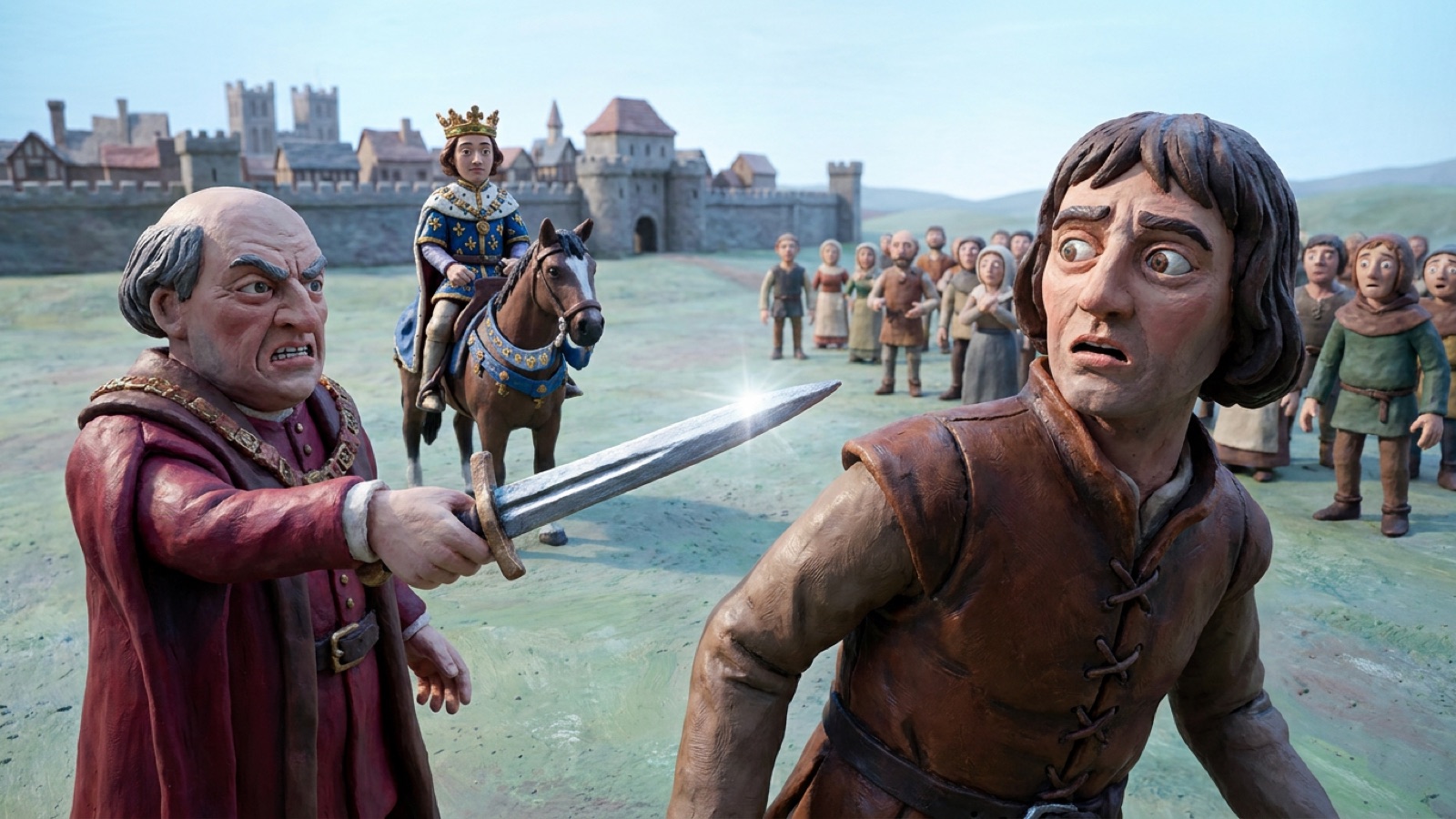
The next day at Smithfield, Tyler approached the king with new and bolder demands. He spoke with the easy confidence of a man who had already won. He did not see the trap.
William Walworth, Lord Mayor of London, had not slept in two days. He had watched the city burn. He drew his dagger and stabbed Wat Tyler in the throat. Tyler fell. The soldiers dragged him away and cut his head off in front of the king. The crowd raised their bows.
But the king rode forward alone. A fourteen-year-old boy walking his horse into fifty thousand armed peasants. "I am your king. I will be your leader. Follow me."
The crowd, leaderless, in shock, followed him. He led them out of London. And then he revoked every promise.
"Serfs you are. And serfs you shall remain."
The royal army went to work. Over fifteen hundred of them were executed. Hanged. Drawn and quartered. Heads on spikes on London Bridge. John Ball was hanged, drawn and quartered in St Albans. The king was there to see it.
The dream was dead. Or so it looked.
What actually happened
They thought they had lost. They had not.
The Poll Tax was never collected again in their lifetime. Or their children's lifetime. It would be six hundred and nine years before any government in England dared to try it again.
The lords could not hold the people back. Their villeins kept running. To other manors. To the towns. Some bought their freedom outright. Most simply left. Parliament was deterred from raising another war tax. The Hundred Years' War shifted because the powerful no longer dared squeeze the people.
Within a hundred years, serfdom in England had effectively died out. Not because the powerful chose to free their people. Because the powerful had learned what happened when they refused.
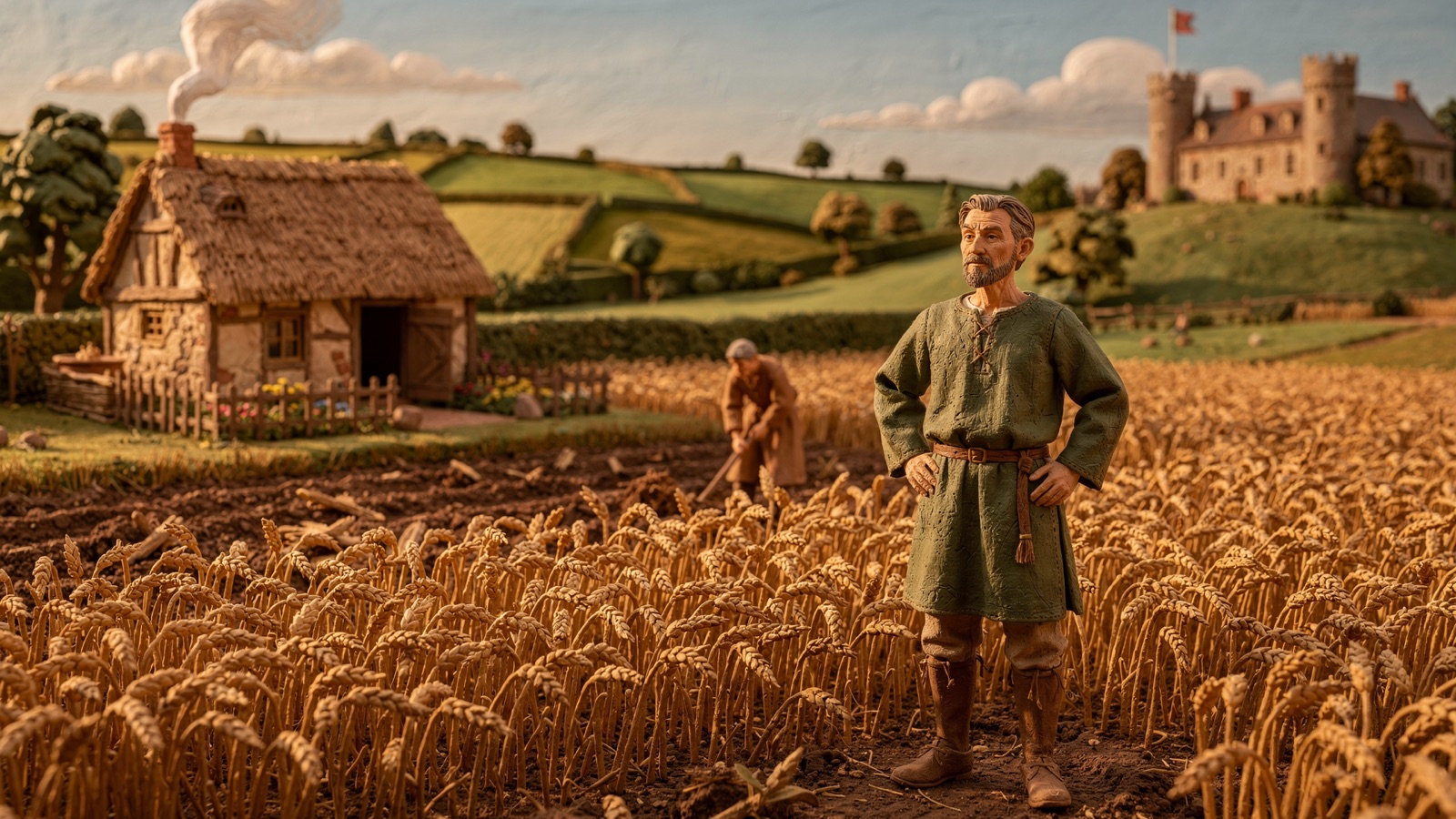
In a village in Essex, a peasant who had marched to Blackheath watched his son grow up free. And in turn, his son's son. The land they worked was theirs. No steward watched. No lord's marker stood at the gate. The triumph landed quietly, generationally, in the lives of people who would never appear in a history book.
The echo
The lesson did not die. Centuries passed. Empires rose and fell. But the lesson did not die.
The Putney Debates of 1647. The Levellers. The Chartists of the 1840s. The Tolpuddle Martyrs of 1834. The Suffragettes of the early twentieth century. Every uprising drew on what happened at Smithfield. Every time the powerful pushed too far, the people pushed back.
And in 1990, a Prime Minister tried to bring the Poll Tax back. The people marched on London again. Two hundred thousand of them. Following the same route the peasants took six hundred years earlier. The tax was withdrawn within a year. Within months, the Prime Minister was gone.
The powerful learned the same lesson. They always learn the same lesson.
Every right we have today was taken, not given. By people like the fifty thousand on Blackheath.
Every right we have was taken, not given.
By people like the fifty thousand on Blackheath.
In every protest. In every refusal. In every "enough" spoken to a power that demanded too much.
The Peasants' Revolt was not the first time the British people stood up to power. It was not the last. The same crowd that walked to Blackheath in 1381 walked to Westminster in 1990 to bring down the same tax. They walked the same route. They got the same result.
This channel is funded by supporters who believe these stories belong to every classroom on these islands. Every story we tell, a supporter paid to keep alive.
Stand with us →The people
-
Wat TylerThe Kentish leader of the revolt. A soldier and tradesman whose first act was to free John Ball from Maidstone Prison. Murdered by the Lord Mayor of London at Smithfield on 15 June 1381 during negotiations with the king.
-
John BallThe radical priest who climbed onto a cart at Blackheath and asked the crowd "When Adam delved and Eve span, who was then the gentleman?" Captured after the revolt was crushed, hanged, drawn and quartered at St Albans on 15 July 1381. The king was there to see it.
-
Richard IIThe fourteen-year-old king of England who rode out to meet the rebels at Mile End, agreed to all their demands, had charters of freedom written and sealed for hundreds of villages, then revoked every promise the moment the crowd dispersed.
-
John of GauntDuke of Lancaster, the king's uncle, the richest man in England in 1381 and the architect of the Poll Tax. His Savoy Palace on the Thames was burned to the ground by the rebels. He escaped on horseback to Scotland and was not in London when the revolt began.
-
William WalworthLord Mayor of London. A wealthy fishmonger by trade. Had not slept in two days when he rode out to Smithfield and stabbed Wat Tyler in the throat with his dagger.
-
Thomas BamptonThe Poll Tax commissioner who arrived in the Essex village of Fobbing in May 1381 to extract a second payment. The villagers drove him out. The revolt began here.
The places
-
Fobbing, EssexThe small village where the revolt began. A modest church and a memorial mark the spot today. Still a working village.
-
Maidstone, KentWhere Wat Tyler's rebels broke open the prison and freed John Ball from years of confinement for his preaching.
-
Blackheath, LondonA vast open field just south of the Thames where the fifty thousand peasants gathered on 13 June 1381. Now a quiet south London park. Walk it on a Sunday.
-
The Savoy PalaceThe Thames-side palace of John of Gaunt, the grandest private residence in medieval London. Burned to the ground on the night of 13 June 1381. The Savoy Hotel now stands on the site, named for what was there before.
-
Mile EndThe field just outside the eastern walls of London where Richard II met the rebels and promised them everything. Now a busy area of east London. The promise was made here.
-
SmithfieldThe open market field outside the city walls where Wat Tyler was murdered on 15 June 1381. Now home to Smithfield Market and St Bartholomew's Hospital. The betrayal happened here.
-
St AlbansWhere John Ball was hanged, drawn and quartered on 15 July 1381. The king travelled north to see it personally.
Timeline
- 1348 – 1350The Black Death sweeps through England, killing roughly half the population. Labour becomes scarce. Wages for ordinary people start to rise.
- 1351The Statute of Labourers caps peasant wages at pre-plague rates. The peasants laugh and continue earning more.
- 1377 – 1380Three successive Poll Taxes are levied to pay for the Hundred Years' War. The duke and the dairymaid pay the same. Resistance grows.
- May 1381Thomas Bampton, Poll Tax commissioner, arrives in Fobbing, Essex. The villagers drive him out. The king sends soldiers. The villagers drive them out too.
- June 1381Essex rises first. Then Kent. Then the eastern counties. Villages empty. Wat Tyler takes command in Kent.
- 11 June 1381Wat Tyler's rebels break open Maidstone Prison and free the radical priest John Ball.
- 13 June 1381Fifty thousand peasants reach Blackheath. That night, John Ball preaches the question that would echo for six hundred years: "When Adam delved and Eve span, who was then the gentleman?" The Savoy Palace is burned to the ground.
- 14 June 1381Richard II meets the rebels at Mile End. He agrees to all their demands. Clerks write hundreds of charters of freedom and seal them with the royal seal.
- 15 June 1381At Smithfield, William Walworth murders Wat Tyler. Richard II rides forward alone and persuades the crowd to disperse. He then revokes every promise. "Serfs you are. And serfs you shall remain."
- 15 July 1381John Ball is hanged, drawn and quartered at St Albans. The king travels north to watch.
- 1381 – 1481Serfdom effectively dies out in England over the following century. The Poll Tax is never collected again. The lords never again dare to squeeze the people the way they did in 1381.
- 31 March 1990Margaret Thatcher's Community Charge (Poll Tax) provokes 200,000 people to march on London, following the same route as the 1381 rebels.
- 1991The Poll Tax is withdrawn. Within months, the Prime Minister is gone. 609 years after the first attempt, the lesson holds.